How seriously do we take winter tires, in the Terrace area?
Seriously enough to hold roadside winter tire safety checks on Saturdays, unite with other agencies to encourage safe winter driving, and increase commercial vehicle enforcement and education for winter tire and chain regulations.
We are so serious about winter tires, that the roadside checks combined with other education, enforcement and engineering efforts by the Terrace Safety Committee, resulted in an astonishing 63 per cent in crash reductions over a recent five-year period. This means less hardship and suffering, and more than $108 million saved in costs from property damage, injury and fatalities.
So, how did all this happen? In 2004, the Terrace Safety Committee was formed of employees from the ministry’s Skeena District, highway maintenance contractor Nechako Northcoast Construction, ICBC, the RCMP and the City of Terrace. They put their heads together to come up with ways to make drivers and highways safer.
Their territory which covers Terrace, Kitimat, the Nass Valley and Prince Rupert – has one of the most difficult and unpredictable winter climates for B.C. motorists. Sudden snow squalls – pockets of heavy snow that accumulate up to 10 centimetres in an hour – drop in frequently, delivered by Arctic air moving over the Pacific Ocean. Then there are winter storms that also reduce visibility, and freeze-thaw cycles that create slippery slush, on a frozen base.
After assessing this terrain, the number of winter highway crashes and concerns voiced about winter roads, the committee came to a solution based on the “three Es” of highway safety – engineering, education and enforcement.
Engineering – Road Improvements
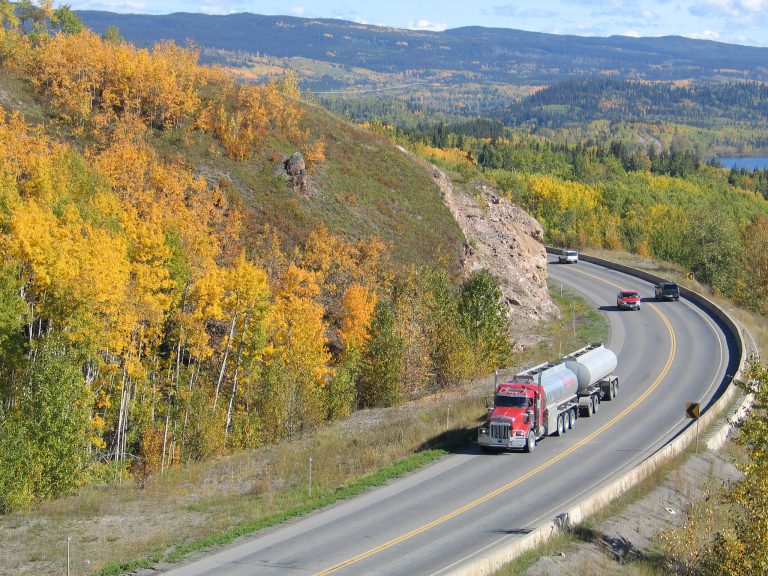
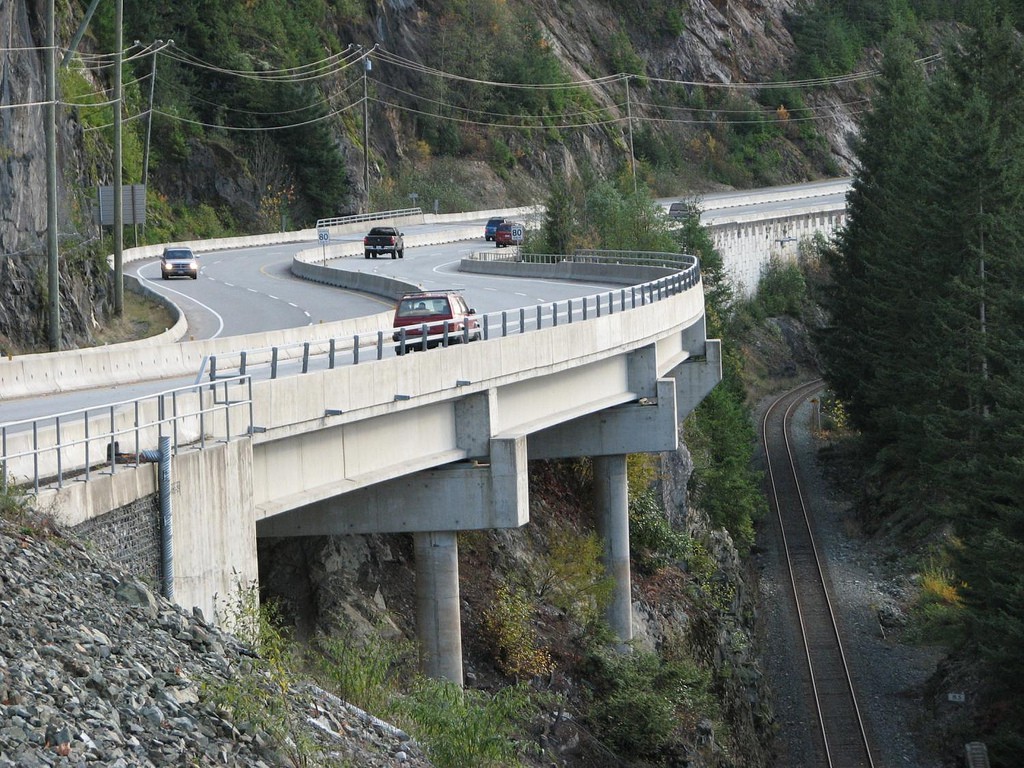
The first E for safety involved engineering improvements to Highways 16 and 37 that included additional shoulder and centreline rumble strips, new pull-outs for trucks to install or remove tire chains, extra barriers, more curve reflectors and new DriveBC webcams. Winter road maintenance was rescheduled around commuter traffic, and upgraded on Highway 37.
Education – An “Untiring” Focus
The Terrace Safety Committee knew that increased awareness was needed by local residents, to change the way they drove in winter. Safety talks and meetings were held for the public, and for employees of large businesses. When the ministry designed new “winter tire” signage, ICBC paid for the sign’s production and Nechako Northcoast subsidized the installations. ICBC sponsored hockey games with draws for free sets of winter tires. The RCMP used a rollover simulator at schools and at trucker and other public events, to demonstrate the dangers of speeding and driving recklessly. DriveBC was promoted, and winter tire checks emerged as a regular event.
At the last winter tire road check, in early November, employees from Rio Tinto Alcan in Kitimat, joined a group of representatives from the ministry (including our Commercial Vehicle Enforcement and Safety unit), Nechako Northcoast and the RCMP, to get the winter safety message out. In addition to talking to drivers and looking over tires, the team presented motorists with a DriveBC bag that contained Shift Into Winter information about winter tires, chains and vehicle preparedness. Also included were Nechako Northcoast’s business cards printed with the DriveBC website address and the contractor’s 24-hour 1-800 phone number (for residents to report any highways concerns). Rio Tinto Alcan topped each package off with a complimentary ice scraper.
Over two hours, the road check on Highway 37 (between Kitimat and Terrace) found 118 vehicles had winter tires, 60 had tires rated for mud and snow (essentially all-season tires) and seven vehicles still had summer tires. Winter tires are considered mandatory on northern highways, and not having them and being involved in an accident could affect insurance coverage and lead to fines.
Over the years, winter tire use has increased, and the media has taken notice. To further get the safety message across, local media report when lack of approved winter tires has contributed to crashes.
The final element in reducing crashes has been penalizing those whose equipment or driving is unsafe. Commercial Vehicle Safety and Enforcement has increased enforcement and education for winter tire and chain regulations for large vehicles, on the road, and at the Commercial Vehicle Inspection Station, in Terrace. RCMP increased enforcement and posted a highway patrol officer, in Kitimat. They also regularly issued news releases about serious crashes they attended.
The 63 per cent crash reduction from 2004 to 2009, in the Skeena area, demonstrates that the Terrace Safety Committee’s “three Es” have worked. We’re pleased with the dramatic reduction in crashes, and will continue our winter tire road checks and other education efforts, because we never consider safety a “tired” topic.
This is just one story of how we’re working across the province, to partner up for safety.